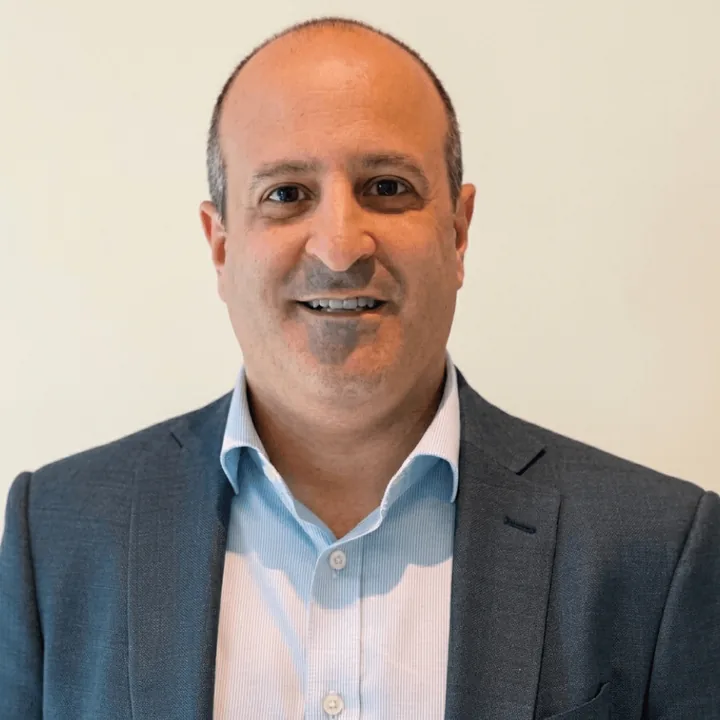
Tom Lee
Chair
Chairman of BitMine Immersion, an anchor funder of this organisation and one of the largest corporate holders of ETH.
We charge institutions nothing, which means somebody else pays. You are entitled to know exactly who, what they get for it, and what we have not settled yet.
Where that boundary matters to a decision you are making, ask us and we will say plainly which side of it we are on.
Ethereum Institutional is an independent non-profit, launched on by the three people who built and ran the Ethereum Foundation's enterprise function. We are headquartered in New York and engage institutions globally.
We are not the Ethereum Foundation, and we do not speak for the Ethereum protocol. The Foundation stewards the protocol and its properties; we hold the institutional relationship.
Open. Our legal entity name, jurisdiction of incorporation, registration number, and registered address are published here on incorporation of the operating entity. Until that line reads as fact rather than pending, treat this section as incomplete, and hold us to it.
Two of three seats are held by our anchor funders. That is stated here rather than discovered later.
Board members as at 24 August 2026
Chair
Chairman of BitMine Immersion, an anchor funder of this organisation and one of the largest corporate holders of ETH.
Director
Chief executive of SharpLink, an anchor funder of this organisation and a substantial corporate holder of ETH.
Director, Executive Director
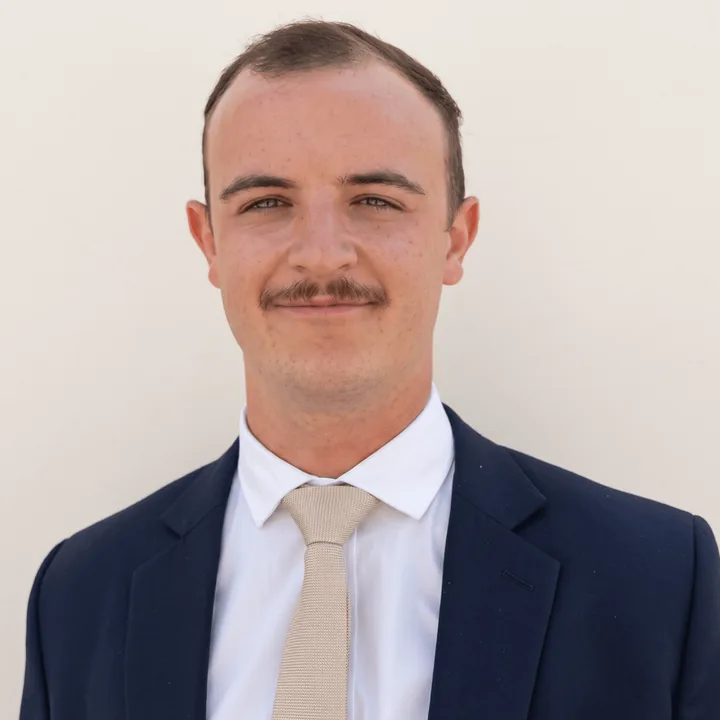
Executive of this organisation. Previously built the Ethereum Foundation's enterprise function; previously EY Financial Services.
No advisory fee, no consulting fee, no engagement fee, no product.
Funding sources as at 24 August 2026
Anchor funder
Band pending
No editorial control, no review of research before publication, no seat in an institution’s engagement, no preferential routing. A board seat, held by its chairman.
Anchor funder
Band pending
The same. A board seat, held by its chief executive.
Anchor funders, Ethereum co-founders
Band pending
The same. No board seat.
More than one hundred participants
Band pending
Capital, time, expertise, or amplification. Explicitly not preferential access, not routing priority, and not a say in what we publish.
These are the facts a diligence team would find. We would rather hand them to you.
BitMine and SharpLink are among the largest corporate holders of ETH; together they hold roughly 6.6 percent of supply. Institutional adoption of Ethereum increases the value of their holdings. Our board is chaired by one of them and includes the chief executive of the other.
We do not think this is disqualifying, and we do not think it is nothing. Concentrated, conviction-led funding is how ambitious institutions get started; undisclosed, it becomes the thing that discredits everything else on this site.
Ethlabs and EthSystems share our anchor funders. Etherealize was seeded by the Ethereum Foundation and Vitalik Buterin. When we introduce you to any of them, that relationship is disclosed in the introduction itself, not buried here.
More than a hundred ecosystem organisations support us, and many of them build the custody, layer-two, staking, and tokenisation infrastructure our research assesses. Provider relevance is decided by your requirement, never by supporter status, and the basis for every introduction is logged. Where a supporter appears in an assessment or a shortlist, the disclosure appears with it.
A sustained fall in the price of ETH reduces our funders’ capacity and, in time, our runway. We are broadening the funding base for exactly this reason, and we report against that intention annually.
Disclosure explains the risk. These are the structures that manage it.
01
Funders and supporters see our research when the public does. There is no pre-publication review, no right of reply before release, and no veto.
02
Publication is approved by the research lead, not by the board and not by a funder.
03
Our methodology explicitly permits, and our register regularly records, the conclusion that Ethereum does not currently satisfy a requirement. If you never see the word unresolved on this site, the firewall has failed.
04
Introductions and provider mentions are selected by requirement fit, with the basis logged and auditable internally.
05
Every published claim carries its epistemic label, its source, and the date it was last verified. Advocacy is labelled as advocacy, so that research can be read as research.
06
We intend that no single funder exceeds a set share of our funding within twenty-four months, and we publish progress against that annually.
View. Our funders' interests and our credibility point the same way only if the research stays honest. Institutional adoption at scale happens through diligence teams who trust their sources; rigour is not in tension with our mission, it is the only way the mission travels.
7 items, each with a named owner and a date by which it is answered. This list is the reason the register is worth reading.
01
Open. Our legal entity name, jurisdiction of incorporation, registration number, and registered address are published here on incorporation of the operating entity. Until that line reads as fact rather than pending, treat this section as incomplete, and hold us to it.
David Walsh // answer by
02
Open. We have committed to seating at least one independent director of institutional standing, unaffiliated with any funder, within twelve months of launch. That search is open; the appointment will be announced here.
David Walsh // answer by
03
Open. The share each funder contributes is published as a band once the first full financial period closes. Until then every row above reads "band pending", which is a gap and not a policy.
David Walsh // answer by
04
Open. We are not an Ethereum Foundation programme, and the working arrangements between us are not yet set out in a public memorandum. A written memorandum covering inquiry routing, the division of labour, and the terms on which we use the Ethereum name and mark is in progress. Until it is signed and published, the honest description of our relationship is exactly this paragraph.
David Walsh // answer by
05
Open. Our record-keeping is not yet independently audited, so our claim that your context outlives any single member of staff currently rests on our own assurance.
Marius Smith // answer by
06
Open. How seats in the rooms we convene are allocated is not written down. Until it is, an invitation is a judgement call and we should not pretend otherwise.
Marius Smith // answer by
07
Open. Our own evidence on validator concentration and staking governance is thin. Six deployments bear on a requirement that a large allocator would treat as central, which is not enough to publish a confident assessment.
David Walsh // answer by